K2 Space Raises $500M at $6.8B Valuation to Build Bigger Satellites
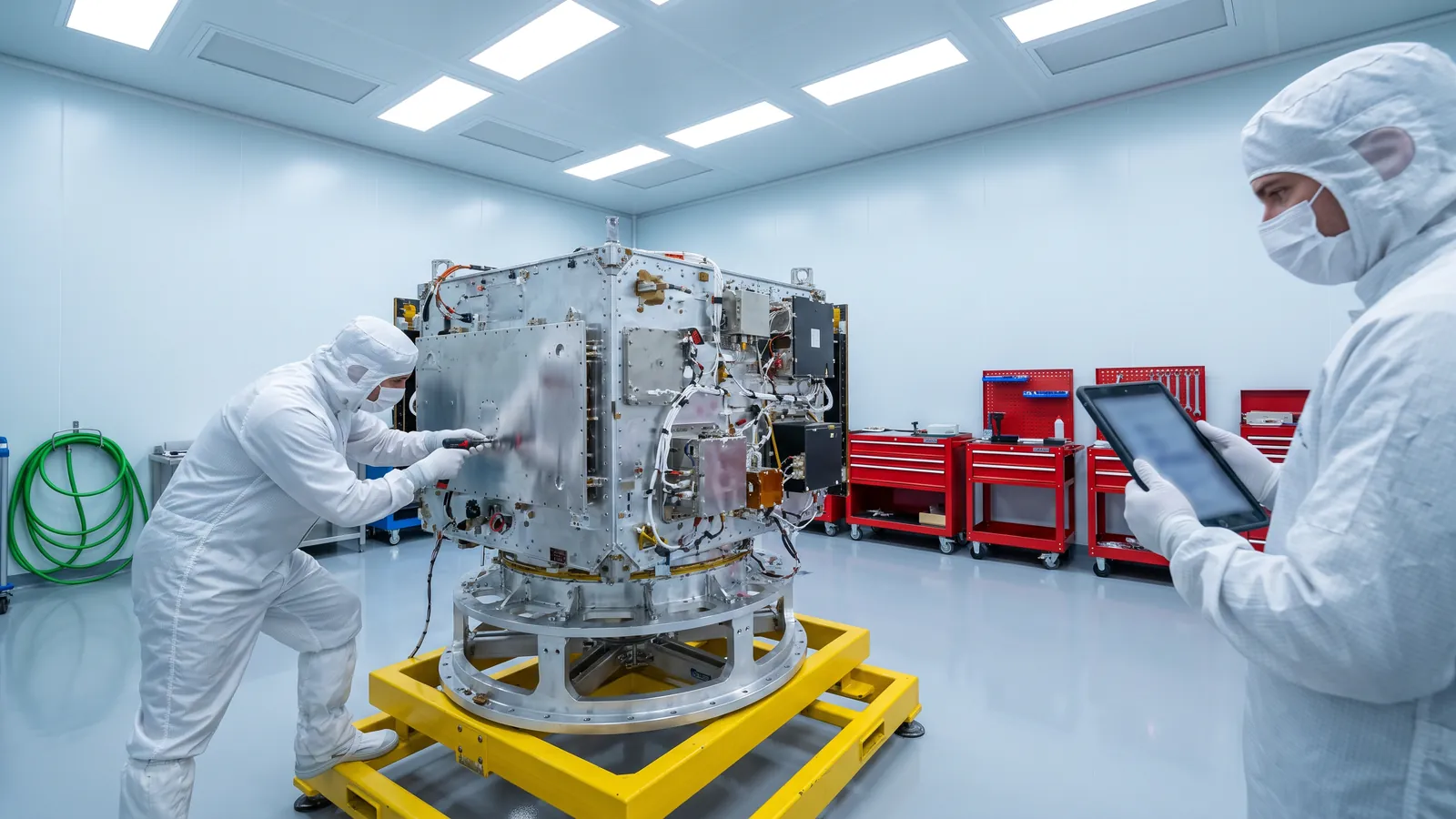
K2 Space, a satellite maker in Torrance, California, has raised a $500 million Series D at a $6.8 billion valuation. Kleiner Perkins and ICONIQ led the round, which the company announced on July 30, 2026. The money will help K2 scale production of large, high-power satellites.
The Round
CapitalG, Lightspeed, Altimeter, Spark Capital, Sands Capital, ARK Invest and T. Rowe Price Associates also invested, along with other existing backers. Reuters reported that Kleiner Perkins and ICONIQ are both new to the company, as is CapitalG, Alphabet's venture fund.
The valuation is more than double the last one. K2 raised its previous round, a $250 million Series C, at a $3 billion valuation, according to the company. Aviation Week dates that earlier valuation to December 2025. With the new round, K2 has raised more than $1 billion in total.
Brothers Karan Kunjur, the CEO, and Neel Kunjur, the CTO, started the company in 2022, according to Cosmic Log.
Reuters reported that space companies raised about $7.5 billion across 141 venture deals in the second quarter of 2026, after a record $8 billion across 159 deals in the first quarter. Reuters linked part of this interest to the SpaceX IPO.
Building Bigger Satellites
"When my brother Neel and I started K2 four years ago, we took a contrarian bet that building bigger would be the future for exploring and developing space," Karan Kunjur said in the announcement.
Its first large satellite, Gravitas, launched in March 2026 on a SpaceX Falcon 9, Cosmic Log reported. The spacecraft weighs two tons, produces 20 kilowatts of power and carried a dozen payload modules for several customers, including the Department of Defense. ICONIQ general partner Tengbo Li said in the release that Gravitas is "now on orbit and operational."
"Every important mission in space comes back to power and mass," said Lucas Oliveira, a principal at Kleiner Perkins. Li said that "in orbit, power determines capability."
Contracts and Factory
K2 says it has more than $1 billion in signed commercial and government contracts. They include an initial batch of 30 satellites for SES's planned meoSphere network. K2 is also building satellites for Anduril, its partner on the Golden Dome space-based interceptor program for missile defense. In addition, the U.S. Space Force selected K2 as the satellite bus provider for the Protected Tactical Satcom-Global program, its first Pentagon program of record.
K2 runs a 180,000-square-foot factory in Torrance designed to build up to 100 satellites per year. "Our supply chain is 85 percent vertically integrated, which allows us to build our large satellites quickly and at low cost," Karan Kunjur said. The company has also opened an engineering office in the Seattle area.
"That vertical integration is what may take the company from one satellite to dozens to hundreds," said ICONIQ's Li. Kleiner's Oliveira said the team "proved it in orbit, and are now winning major commercial and national security programs."
What Comes Next
K2 plans a mission called Trinity, carrying multiple satellites, in the second quarter of 2027. In the second half of 2028, it plans to introduce a 100-kilowatt "Giga-class" satellite. Neel Kunjur said it "will be the foundational platform for deploying massive amounts of compute on orbit." Aviation Week reported that the new funding supports plans for a "more than 100 kW-class spacecraft."
The company expects to deliver large constellation orders over the next 24 to 48 months. "K2 will continue to invest in research and development that gives our large platforms a key advantage in the satellite market," Karan Kunjur said.
Sources
CIBA Editorial
Author of this post